

In partnership with

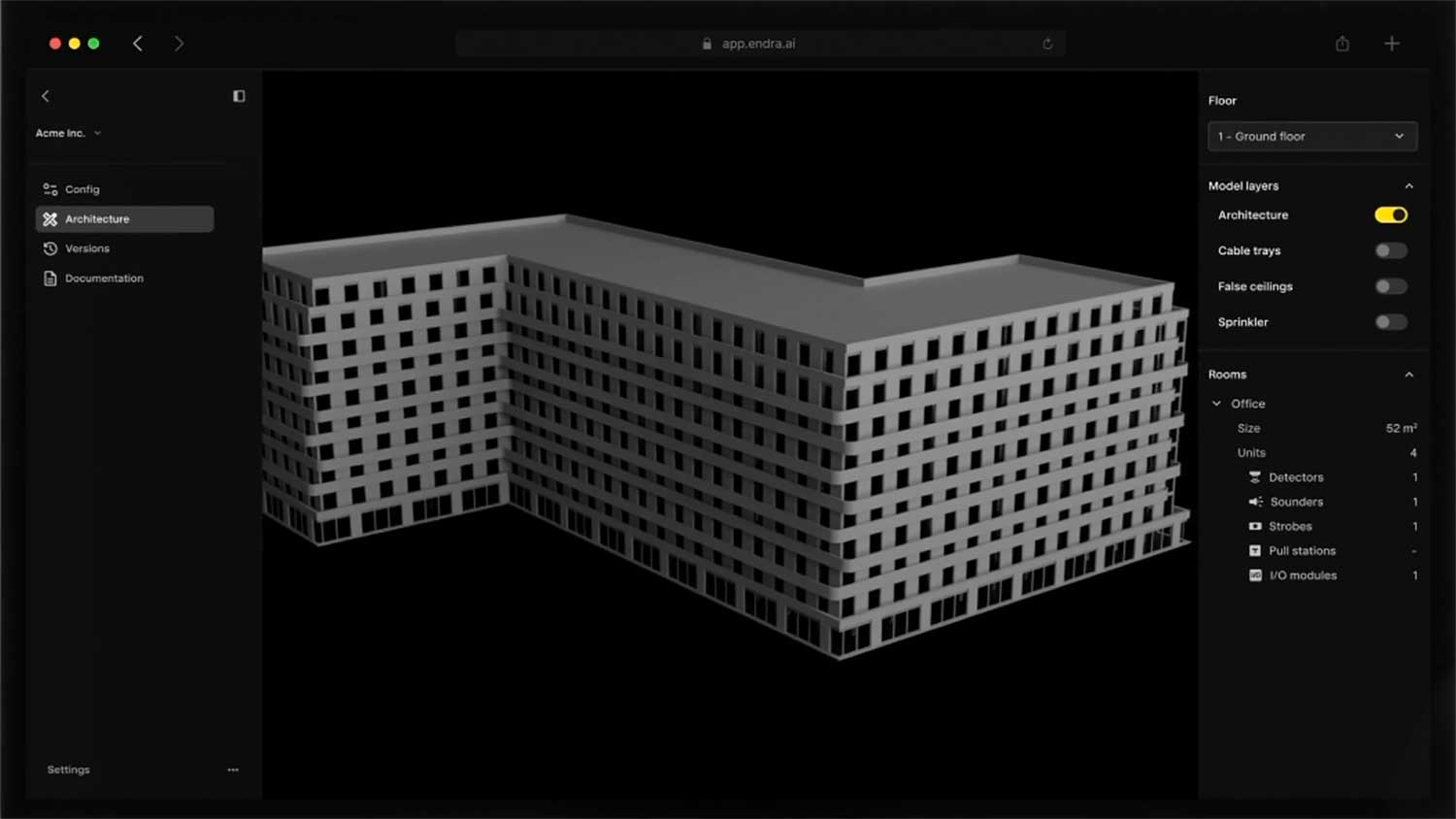
Endra, currently open for ‘Early Access’ in the EU, UK and the US, uses AI, simulation, and computational geometry to automatically generate designs for mechanical, electrical, and plumbing (MEP) systems in commercial buildings.
The software is designed to transform traditionally manual workflows – such as placing devices, routing conduits, and producing compliance-ready documentation – into ‘fast, automated processes’
Endra is driven by a combination of natural language prompts and imported files including CAD/BIM datasets (e.g. DXF, IFC) and building specification documents (e.g. PDF).
The system analyses the geometry, applies building codes, and generates code-compliant 2D drawings / 3D model, along with documentation such as schedules, diagrams and lists.
In the case of an electrical design, it automatically places units and routes cables in the most efficient way. Designs can be refined by distributed teams using built in collaboration tools.
According to Endra, its AI system was able to dramatically reduce the time needed to produce complete fire alarm system documentation for a large logistics centre in Sweden — from 304 consultant hours to just 30 minutes — while achieving a 98.8 % quality match to the manual design.
Endra can be integrated with Revit using a Revit plug-in that allows Endra objects to be mapped to Revit families and write/create .RVT files.
The AI Spotlight Directory is published by AEC Magazine in partnership with HP and Nvidia.
